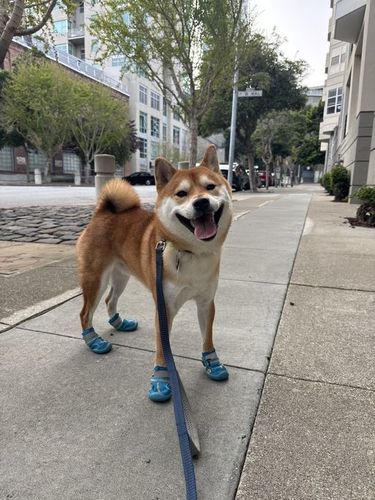
If your dog has turned into a garden statue the moment you buckled on a pair of boots, you're not alone. The freeze, the high-step moonwalk, the look of pure betrayal — it's a normal sensory reaction, not stubbornness. It resolves faster than most owners expect, but only if you don't make the two mistakes that keep it going.
Dogs need boots when the surface would harm bare skin. The test is simple: hold the back of your hand flat against the pavement for 7 seconds. If you pull away, it's too hot for your dog's paws. In winter, the bigger danger isn't cold — it's road salt and chemical de-icers, which cause burns on contact and are toxic if your dog licks their paws afterward.
Most boot refusal traces back to one thing the packaging never mentions: the boot is pinching the dewclaw against the leg. These small digits sit just above the paw on the inside of each leg. Run your finger along that spot before fitting. If you feel a nail, size up or look for a boot with a wider shaft. That single check solves half of all fitting problems before a boot ever touches the ground.
While you're at it, trim your dog's nails. Long nails change the shape of the paw and make even a well-fitting boot uncomfortable — like trying to walk in shoes that are a half-size too small.
The statue behavior is a sensory reaction, not resistance. The feedback from the ground has changed and your dog's brain is recalibrating. The high-step moonwalk that often follows is the same thing. Both behaviors typically disappear within 5 minutes of actual walking, especially outdoors where there's something more interesting to focus on than the pressure on their feet.
Don't start with all four. Begin with just the front two, where dogs are less sensitive, for two-minute sessions. And here's the part most guides skip: when you put the boots on matters more than how long the session runs.
Buckle them on the exact second you open the front door for a walk, or right as the food bowl hits the floor. You're hijacking your dog's excitement before the sensory weirdness has time to register. A quiet living room gives your dog nothing to focus on except the things on their paws — that's why indoor-only training usually fails. The distractions of a real walk do the work for you.
Once the front two are tolerated without fuss, add the rear boots. Most dogs need 3–5 short sessions at this pace, not weeks of patient conditioning.
Check the dewclaws, time the first session to something your dog already loves, and start with two boots instead of four. That sequence does more work than any amount of patient treat-dispensing on the hallway floor.