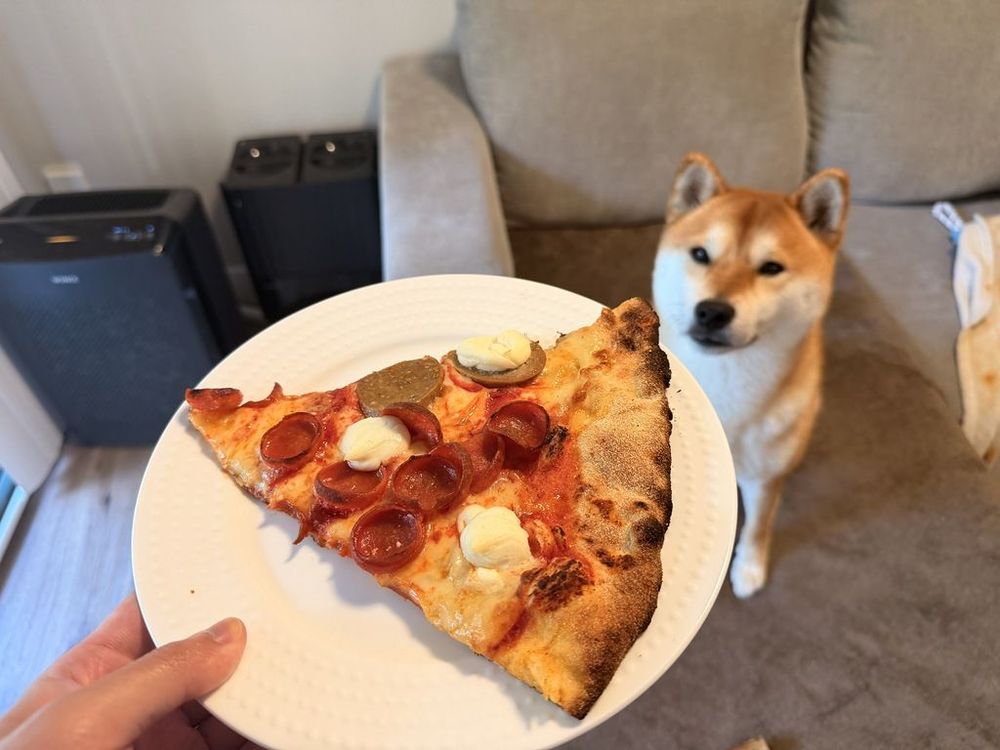
If you've ever split your hashbrowns with the dog, dropped a corner of cheese into a waiting mouth, and figured a little sharing couldn't hurt, you're in normal company. Most advice on feeding dogs human food instead of dog food gets one thing backwards: your dog isn't biologically wrong for wanting real food off your plate. The problem isn't the instinct — it's that no single plate was ever built to be a complete diet.
In 2013, a research team led by Erik Axelsson published a genome comparison of dogs and wolves in Nature that reset how nutritionists talk about this. Among the regions showing the strongest signals of selection during domestication were genes for starch digestion and fat metabolism. Dogs carry, on average, roughly seven times as many copies of the pancreatic amylase gene as wolves — the enzyme that breaks starch down in the small intestine. The journal's own summary of the paper noted that dogs handle a starch-rich diet better than wolves do.
Which means the dog at your feet is descended from animals that thrived alongside people, eating what people ate rather than what wolves hunted. That's the strongest case there is for feeding a dog real, whole ingredients — and the weakest possible case for feeding a dog whatever happens to be on your plate tonight.
So what actually changed?
Formulation, not food. The refuse heap that shaped your dog's pancreas held a rotating mix of grain, bone, gristle, and vegetable trimmings — never one dish standing in for a whole day's nutrition. Modern cooking is different: radically denser in fat, salt, and sugar, and served as one complete meal rather than scattered scraps. Your dog's biology is built to thrive on real food. It was never built for one plate to be the entire diet.
Usually it isn't the ingredient — it's the concentration. Most of what's on your plate is safe in itself. The trouble is that modern cooking packs fat, salt, and calories far tighter than any diet dogs evolved eating, and every bite of it displaces food that was balanced on purpose. Density and displacement, not toxicity.
This is where sharing quietly stops being harmless. Tufts' clinical nutritionists put a lean 65-pound dog at roughly 1,000 calories a day, and veterinary nutrition sets the ceiling for treats and table food at 10% of daily calories — so about 100 calories of leeway.
One ounce of cheddar is about 115.
That's the whole allowance, gone in a single slice, for a dog the size of a Labrador. Halve the dog and you halve the budget: a 30-pound terrier is working with something closer to 55, which a couple of oily hashbrown bites will spend before you've picked up your fork. Nobody feels like they're overfeeding — a slice of cheese is a rounding error on a human plate. On a body a quarter your size, it's the entire discretionary line.
Think of it as a household budget with a small cash allowance. The cash is genuinely yours to spend. It also doesn't cover rent, and a dog fed from the plate every day is paying rent out of the cash line.
Fat itself isn't the villain. Dog food is full of it — the AAFCO adult maintenance profile sets a fat floor, not a ceiling, and most kibble sits well above it. What dogs handle badly is a large fat load delivered suddenly, with no ramp.
The pancreas releases fat-digesting enzymes on demand. Overwhelm that system fast enough and those enzymes can activate early, inside the organ, and inflame the pancreas itself. That's pancreatitis: sudden, severely painful, occasionally fatal. Dr. Amy Nichelason, clinical professor of primary care at the University of Wisconsin–Madison School of Veterinary Medicine, notes in the school's guidance on table scraps that home cooking uses "a lot of oil and butter that make it delicious for us," and that dogs unaccustomed to it can end up with digestive upset or an inflamed pancreas.
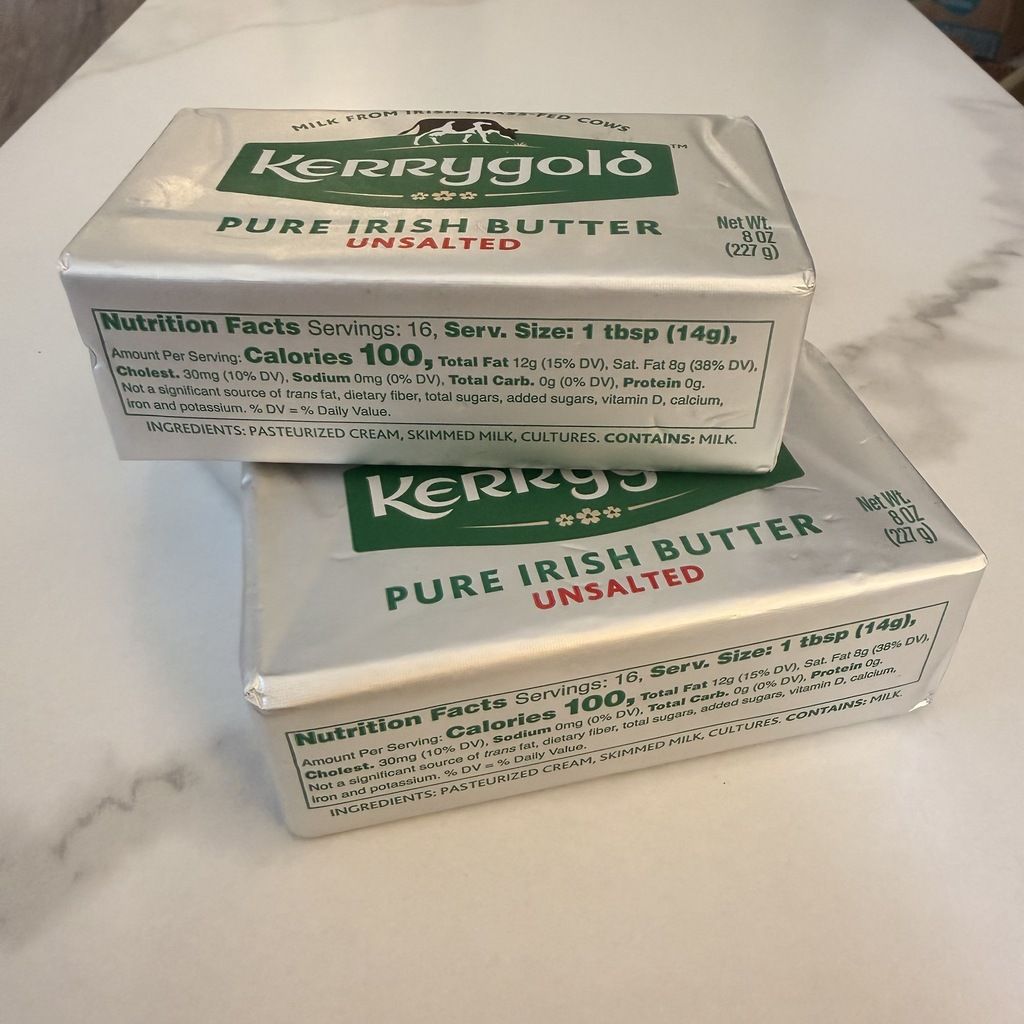
One tablespoon of butter — the kind hashbrowns get fried in — carries 12 grams of fat and 100 calories. That's nearly double the 55-calorie treat allowance for a 30-pound dog, gone in a single spoonful. Cheese compounds the problem from another direction — fat plus concentrated salt — and UC Davis flags high salt for dogs with cardiac, blood pressure, or kidney conditions.
Worth knowing what this looks like at home, because it's rarely dramatic. The classic sign is the "praying" posture: chest and forelegs down, hindquarters up, because the position eases abdominal pain. But the Merck Veterinary Manual makes a sobering point — more than 90% of human pancreatitis patients report pain, while recorded rates in dogs run far lower, most likely because we simply miss it. Plenty of affected dogs never strike a pose. They just go quiet, stop interacting, and turn down dinner. A greasy meal followed by a dog who's suddenly off is worth a same-day phone call, not a wait-and-see.
Survive, often. Thrive, rarely. Balanced food isn't just calories with vitamins added — it hits ratios, notably calcium to phosphorus, held between roughly 1:1 and 2:1, plus ten essential amino acids at specified minimums. Meals assembled from a human plate miss those targets badly and unpredictably.
Tufts' nutritionists describe the mechanism bluntly: once outside food climbs past that 10% line, it dilutes the balanced diet until the whole thing stops meeting requirements. The dog eats plenty and still comes up short. Home-cooked feeding can absolutely work, but only when a veterinary nutritionist formulates it — a genuinely different project from sharing dinner. Start with choosing protein for homemade dog food if you're headed that way.
There's a middle path between doing that formulation yourself and a bag of pellets: food built from ingredients you'd recognize on your own plate, already balanced to what a dog actually needs. That's the idea behind Grublify — human-grade ingredients, with the ratio math already done for you.
There's a wrinkle here that ties back to the genetics. Those amylase copy numbers vary widely between individual dogs, so starch tolerance isn't uniform across the species. Dr. Jennifer Larsen, chief of the Nutrition Service at the UC Davis veterinary hospital, notes in Synergy, the school's magazine, that "some pets can eat different foods at every meal," while others need a slow transition. Your dog handling hashbrowns last Sunday tells you about your dog, not about hashbrowns — and not about the terrier next door.
Here's a genuine difference between you and your dog. Because dogs are HDL-dominant animals, carrying most of their cholesterol in the fraction humans spend their forties trying to raise, veterinary researchers class them as atheroresistant. Clogged arteries do turn up in dogs, but almost always alongside hypothyroidism, diabetes, or sustained extreme cholesterol. The forty-year cardiovascular arithmetic driving human diet advice mostly doesn't transfer.
That's real, and it's narrower than it sounds — because the slow risk didn't disappear, it just moved. It's weight. Daily calorie creep from the plate is how dogs get heavy, and UC Davis links excess weight to diabetes, arthritis, and breathing problems. Nobody notices a slice of cheese. Everybody notices, two years on, that the dog can't manage the stairs.
Plenty, if you keep it lean and inside the 10%. Plain cooked chicken or turkey with the skin off, green beans, carrots, cucumber, plain canned pumpkin, a little plain cooked rice or sweet potato. Skip anything fried, buttered, breaded, or salted, and skip the known hazards outright — grapes and raisins, onions, chocolate, and anything sweetened with xylitol. Serve it at body temperature or below, since dogs can eat warm food but not hot.
The same arithmetic runs through training, which is why keeping treats from adding weight belongs alongside this. Measure the allowance once, in actual calories, and the daily decisions get easy. A slice of your dinner was never built to be a diet — no matter how good the ingredients on it are. Real, whole ingredients are exactly what your dog's biology is built for; a properly balanced, complete diet is how they actually get there safely.